The Road to 15.5K: Three Weeks Until the Istanbul Marathon
Three weeks to go. On November 1, I'll be standing at the starting line of the Istanbul Marathon's 15.5K race. And although I've been racing for years, there's still something about having a date circled on the calendar that changes the way I approach training.
Suddenly, every session has a purpose. Every kilometer feels like it's leading somewhere.
Today, I've just finished my long run, and it feels like a good moment to look back at the past few weeks. Not because everything has gone perfectly. It hasn't. Some sessions felt great, others were harder than expected, and a few had to be moved around because, well, there's life outside training too. But overall, I'm happy with where I am. And with 21 days left, I'm starting to think less about how much more training I can squeeze in and more about how to make sure I arrive at the starting line ready to race.
I've spent a good part of my life doing endurance sports. Swimming came first, followed by triathlons, half marathons, trail races, obstacle courses, and plenty of other challenges along the way. So running 15.5 kilometers isn't exactly unfamiliar territory.
But there's a big difference between covering a distance and actually racing it. I don't want to simply finish. I want to run well. I want to find a pace I can hold, manage my effort properly, and still have something left in the final kilometers. That last part is especially important to me. Anyone who's raced knows how easy it is to feel fantastic in the first few kilometers. The real test comes later, when your legs start asking questions and you have to decide whether you're going to maintain the pace or back off. That's the part I've been training for.
September was when the preparation started to feel more serious. I introduced more structured sessions: threshold runs, 1K intervals, longer 2K repetitions, and group runs.
I've always liked structured training. There's something satisfying about knowing exactly what you're supposed to do and then seeing whether your body can deliver. But threshold sessions reminded me that running isn't always about going faster. Sometimes it's about finding that uncomfortable but manageable effort and staying there. Not sprinting. Not cruising. Just working. And honestly, those sessions can be harder mentally than short intervals. With intervals, you know a recovery break is coming. During a continuous threshold effort, there's nowhere to hide. You settle into the pace and try to keep everything under control. Breathing, rhythm, stride, concentration. It's the kind of work that doesn't look particularly exciting on Strava, but I suspect it'll be very useful on November 1. I also enjoyed getting some group runs into the schedule.

Running with others brings a different kind of energy. Sometimes you naturally pick up the pace without realizing it. Other times you have to remind yourself that you're there to complete your own workout, not someone else's. I've learned that sticking to the planned pace can require just as much discipline as pushing harder.
As October arrived, the sessions became more specific. The focus shifted towards running faster while keeping the effort sustainable. I've been doing longer repetitions, 6 × 800-metre intervals, tempo runs, and my usual Sunday long runs. The 800s have been particularly interesting. I enjoy that distance. It's long enough to hurt a little, but short enough to let you run at a decent speed without completely falling apart. The temptation, of course, is to attack the first repetition. I've done enough interval training over the years to know that this isn't always a great idea. There's not much satisfaction in running a brilliant first 800 meters and then spending the rest of the session trying to survive. I'd rather finish the sixth repetition knowing I could maintain the quality of the workout. Consistency matters more to me than producing one impressive split.

This week, I also completed a 5K tempo run. It was originally planned for Thursday, but I couldn't make it happen, so I moved it to Friday. Nothing dramatic. Just a reminder that even with a training plan, things don't always go according to schedule. And that's fine.
I think we sometimes become too obsessed with following a program perfectly. Missing the planned day doesn't automatically mean missing the benefit of the workout. What matters is how you adjust without turning the rest of the week into a mess. The run itself was a useful session. Five kilometers isn't particularly long, but running continuously at a demanding pace requires a different mindset from interval training. No breaks. No resets. You just settle in and hold it together. I focused on keeping the opening controlled, finding a consistent rhythm, and avoiding the temptation to force the pace too early. Simple in theory. Not always so simple when you're actually running.
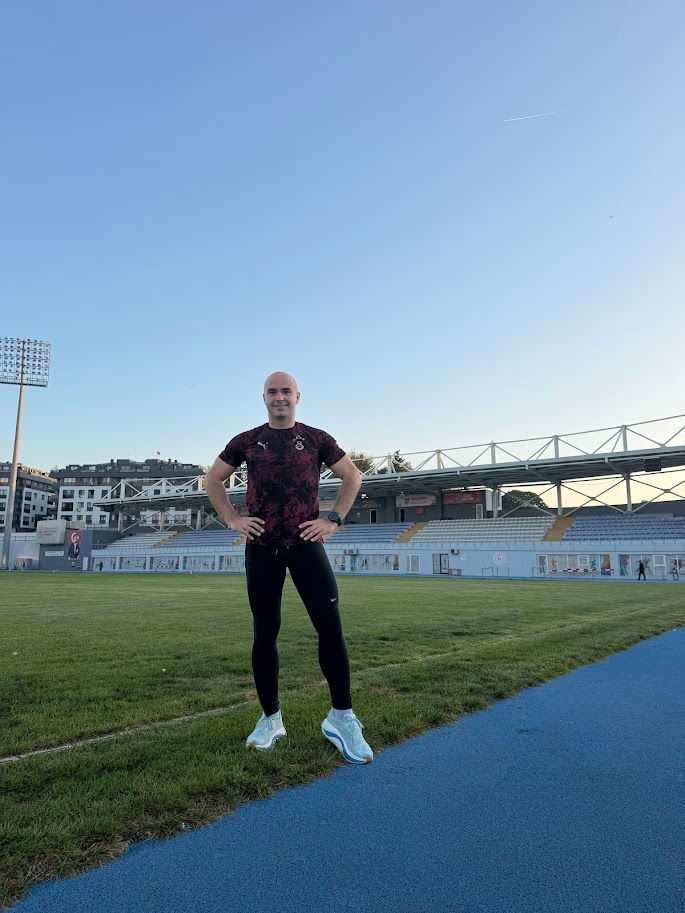
And then there was today's long run. I like Sunday runs. There's something different about heading out knowing you don't have to chase every kilometer. You can settle into a rhythm, let the distance build, and pay attention to how your body feels. Of course, long runs aren't always easy. Some days the legs feel light from the beginning. Other days it takes several kilometers just to feel comfortable. But that's part of what makes them valuable. For this race, I'm particularly interested in what happens after the 10K mark. That's where I expect the real work to begin. It's one thing to run at a good pace when you're fresh. It's another to maintain that same pace when you've already been working for a while. I want to reach that point feeling controlled rather than desperate.
Whether I manage that on race day remains to be seen.

I've been using my Garmin Fenix 8 throughout this training block. Like most endurance athletes, I enjoy looking at the data. Pace, heart rate, training load, recovery, VO2 max estimates... There's always another number to analyze. And I do find it useful. But I've also learned not to take every metric too seriously. You can run the same pace on two different days and have completely different experiences. One day, everything feels smooth. Breathing is easy, the legs are responding, and you barely think about the effort.
Another day, the same pace feels like hard work. Nothing has necessarily gone wrong.
Maybe you didn't sleep well. Maybe you're carrying fatigue from a previous session. Maybe it's warmer than usual. Or maybe it's just one of those days. That's why I try to look beyond the numbers. My watch can tell me how fast I ran. It can't always explain why a particular pace felt easy or difficult. And after years of training, I've come to trust that distinction.
Running hasn't been my only focus. Swimming is still very much part of my routine, and recently I've also been working on improving my sprint times in the pool. I enjoy having both sports in my life, although combining them isn't always straightforward. A hard running session followed too closely by a demanding swim can leave you feeling a little more tired than expected. And sometimes that fatigue doesn't show up until the next workout. I'm trying to be smarter about how I combine sessions, especially now that race day is getting closer. I've also been paying more attention to mobility, strength, and recovery. Not because I suddenly want to become the world's most disciplined athlete, but because I've learned that there's a limit to how much training you can absorb.
More isn't always better. Sometimes the smartest thing you can do is finish a session, eat properly, get some sleep, and leave the rest for another day. It sounds obvious. But anyone who's passionate about training knows how difficult it can be to actually follow that advice.

So, am I ready? That's the question, isn't it? Three weeks before a race, you start looking for signs. A good interval session feels like confirmation that everything is on track. A disappointing workout makes you wonder whether you should be doing more. I've experienced both sides of that. Right now, I'd say I'm in a good position. My endurance base is there. I've been doing consistent speed work, and the longer sessions have given me confidence that I can handle the distance. But I'm also realistic. Being able to run a certain pace during intervals doesn't automatically mean you can hold it for 15.5km.
There are no recovery breaks on race day. And that changes everything. I have a finishing time in mind, of course. Anyone who knows me knows I don't usually enter a race without some kind of target. But I'm keeping that number to myself for now.
I'd rather focus on running a smart race than spend the next three weeks obsessing over a particular time. Besides, the clock will tell the story soon enough.
This is the stage where things can get a little tricky. After weeks of hard training, there's always a temptation to do one more big session. One more long run. One more demanding interval workout. Just something to make you feel a little more prepared.
But I know that's not what I need right now. The fitness I've built over the past several weeks isn't going to disappear because I reduce the volume. If anything, giving my body the chance to recover properly should help me use that fitness when it matters.
So the plan is to gradually ease back on the overall workload while keeping enough intensity to stay sharp.
I'm also running at the Bosphorus Run Bebek race on October 18. If I do, I'd like to use it as an opportunity to practice pacing and get a little race atmosphere into my legs before November 1. Nothing more complicated than that. During the final week, I'll focus on the basics. Good sleep. Sensible nutrition. Staying healthy. Keeping the legs moving without creating unnecessary fatigue. And perhaps the hardest part of all: resisting the urge to do too much.
Istanbul is a special place to race. There's the atmosphere, the crowds, the excitement at the start, and the temptation to let everything carry you away. It's very easy to run the opening kilometers faster than planned. I've seen it happen countless times, and I've certainly been guilty of it myself. This time, I want to be more patient. Start controlled. Find my rhythm. Let the race develop. I don't want to spend the first five kilometers feeling like a hero and the final five wondering what happened. The ideal scenario would be to reach the final section still feeling strong enough to push. Of course, writing that from the comfort of my chair is much easier than actually doing it with tired legs.
But that's the plan. And having a plan is better than getting carried away by the excitement of the starting line.
The funny thing about preparing for a race is that everything seems to point towards one particular morning. One date. One starting line. One finishing time. But when I look back at the past few weeks, I realize that the most valuable part isn't necessarily going to be the result. It's the process. Getting up early when staying in bed would have been easier. Finishing an interval session when the last two repetitions felt considerably harder than the first four. Adjusting the schedule when life got in the way. Learning when to push and when to back off. Some sessions were better than others. Some days I felt strong. On others, I wondered why the same pace suddenly felt so difficult. That's training. And I suppose that's one of the reasons I still enjoy endurance sports after all these years. There's always something to work on. Always something to learn. And no matter how experienced you become, the sport has a way of reminding you that nothing is guaranteed. On November 1, I'll stand at the starting line with a goal in mind and several weeks of preparation behind me. I don't know exactly how the race will unfold.
Maybe everything will click, and I'll have one of those days when the kilometers seem to pass effortlessly. Maybe it'll be tougher than expected, and I'll have to fight for every second in the final stretch.
Either way, I'm looking forward to finding out. For now, there are three weeks left.
A little more training, a little less volume, and hopefully some fresh legs on race morning.
The hard work is mostly done. Now it's about trusting it.
See you at the starting line.


